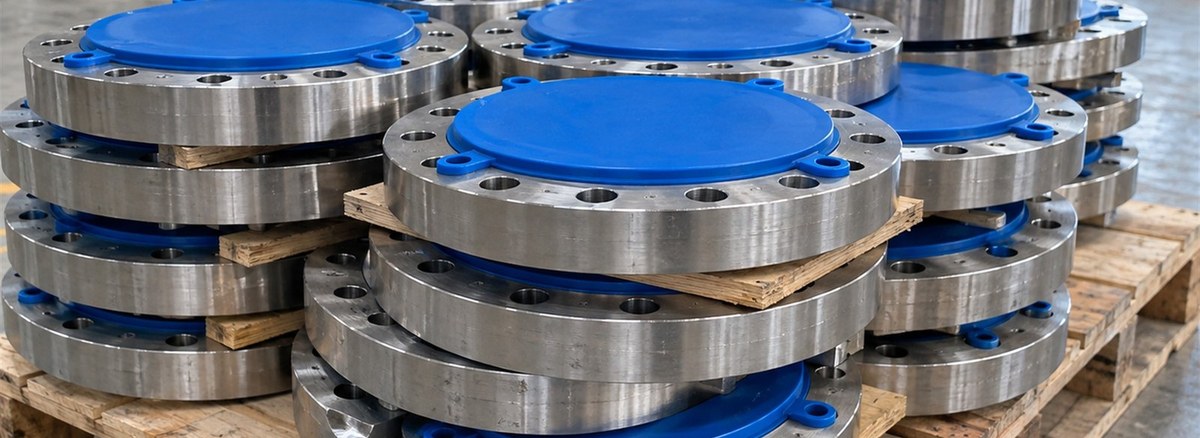
If a flange arrives on site with a scratched face, it is either remachined or it becomes the joint that leaks at the next shutdown. Protection starts before shipment.
Where the damage happens
- In transport: Parts rubbing together, impacts during loading
- In storage: Faces resting on the ground or racks, corrosion from moisture
- While waiting on site: Dust, weld spatter, grinding debris
- Before installation: Covers removed early, leaving the face exposed
Weld spatter is particularly damaging, because removing the stuck particles leaves scratches.
Cover types
| Type | Use |
|---|---|
| Push-in plastic cover | General purpose, economical; short term |
| Bolt-on plastic cover | Long term storage and sea freight |
| Timber or plywood cover | Large sizes, impact protection |
| Metal cover | Heavy shipments and long storage |
| RTJ groove protector | Profiled for the groove surface |
A cover prevents not only scratching but also moisture sitting on the gasket seating area.
Storage rules
- Store flanges upright or on timber blocks rather than flat on the ground
- Keep stainless items separate from carbon steel
- Apply protective oil or VCI paper to the face
- Leave covers in place until installation
- Never leave an open flange in a welding area; cover it
At installation
Once the cover comes off, clean the face and inspect it. A radial scratch will not seal, and remachining is needed. See what to do with a damaged flange face.
Our shipments leave with faces covered and protected. Send your list through the enquiry form.
FAQ
When should covers be removed?
At installation. Removing them early exposes the face to dust, spatter and impact.
Should the face be oiled?
For long term storage, protective oil or VCI paper is used and cleaned off before installation.
Is there special protection for RTJ grooves?
Yes, profiled protectors are used, because a scratch in the groove means a direct leak.
Send us your material list; we reply with price and lead time the same day.
Request a quote