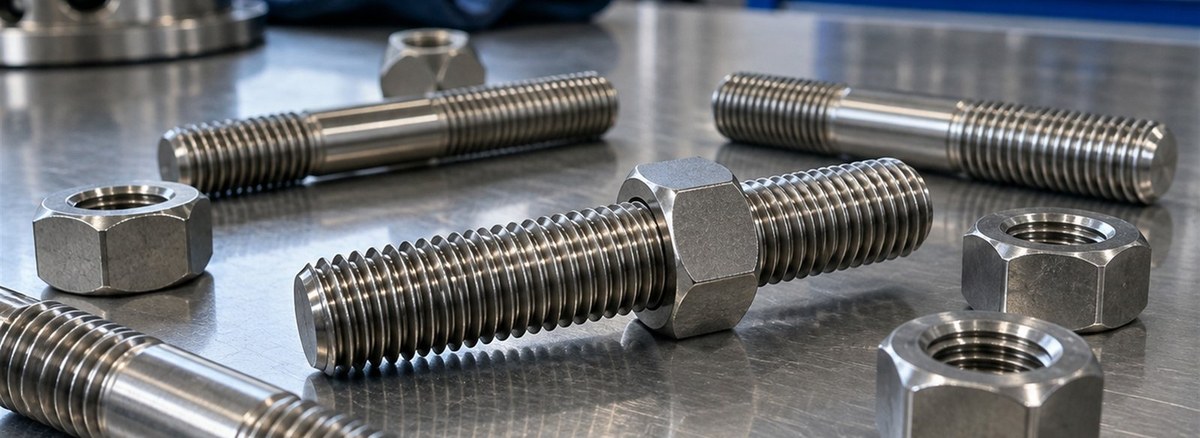
Stainless steel is durable, but handled carelessly it creates unexpected problems. The two seen most often in the field are galled fasteners and faces contaminated with carbon steel.
Galling on stainless fasteners
When stainless surfaces slide against each other, the protective oxide layer breaks down and the clean metal surfaces cold weld together. The nut then moves neither forward nor back, and the only way out is to cut it off.
To prevent it:
- Apply anti seize to the threads; nickel or copper based products are common
- Turn the nut slowly; high speed nut runners increase the risk
- Keep threads clean, since grit and burrs start galling
- Where possible, use stud and nut of different hardness grades
Carbon steel contamination
When carbon steel dust settles on a stainless surface it rusts with moisture and leaves brown staining. This is usually not corrosion of the stainless itself, but it damages the oxide layer and can start real corrosion.
Common sources: machining stainless in an area where carbon steel is cut, using the same grinding disc on both materials, storing on carbon steel racks and using steel wire brushes.
Cleaning uses stainless dedicated brushes, acid passivation or electropolishing.
Storage and handling rules
- Keep stainless items on separate racks from carbon steel
- Use timber blocks and plastic separators rather than metal contact
- Keep protective covers on flange faces
- Keep a separate set of grinding and brushing tools for stainless
- Clean heat tinted areas after welding; that zone is the most corrosion prone
See stainless flange selection and our studs and nuts page.
FAQ
Why does galling happen mostly in stainless?
The protective oxide layer breaks down under friction and the exposed clean surfaces weld together. Carbon steel shows this behaviour far less.
Does brown staining mean the stainless has failed?
Usually it is carbon steel dust rusting on the surface. Left in place, it can start genuine corrosion.
Why clean stainless after welding?
The heat tinted zone has a weakened chromium oxide layer; cleaning and passivation restore resistance.
Send us your material list; we reply with price and lead time the same day.
Request a quote