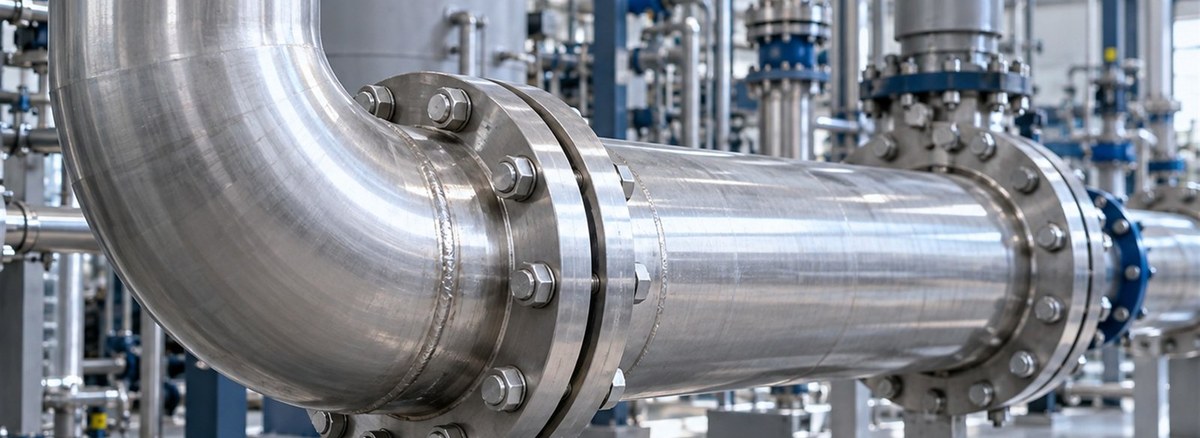
Hydrogen lines create two separate problems: the molecule is so small that it escapes easily, and hydrogen atoms enter the steel and make it brittle.
Hydrogen embrittlement
Atomic hydrogen enters the crystal structure of the metal and initiates cracks under stress. Three factors raise the risk: high strength (hard) material, high residual stress and high hydrogen partial pressure. Softer, hardness controlled material is therefore preferred; choosing a high strength grade "to be safe" makes matters worse.
Material approach
- Carbon steel: Used on low and medium pressure hydrogen lines with limited hardness, usually with post weld heat treatment.
- Austenitic stainless (316L): More resistant to hydrogen embrittlement and the common choice in high pressure and critical service.
- High strength bolting grades: Restricted because of their hardness; fastener selection is assessed separately.
Sealing
Hydrogen passes where natural gas would not. Therefore:
- Flange count is minimised in design and welded joints are preferred
- Metal supported gaskets (spiral wound, kammprofile, metal ring) come forward
- Surface finish and torque control matter more than usual
- Leak testing is done with helium or a hydrogen detector; a soap test is not enough
When ordering
State on the enquiry that the service is hydrogen. Material grade, hardness limit, heat treatment condition, welding procedure requirements and test scope all follow from that. Ask for hardness values to be reported on the certificate.
See stainless flange selection and duplex stainless flanges, and send your list through the enquiry form.
FAQ
Which material is preferred in hydrogen service?
Hardness controlled carbon steel at low pressure, and austenitic stainless such as 316L at high pressure and in critical service.
Why are high strength bolts a problem in hydrogen?
Susceptibility to hydrogen embrittlement rises with hardness, so bolt grades are restricted.
How should leak testing be done?
With helium or a hydrogen detector, because the molecule is too small for a conventional soap test to be reliable.
Send us your material list; we reply with price and lead time the same day.
Request a quote